

In the current quickly developing infrastructural environment, innovative methods are crucial for addressing the complicated demands of city growth and ecological protection. Directional drilling has surfaced as a popular method for placing different services underground, offering considerable advantages over traditional excavation techniques. By enabling for accurate and careful drilling at various orientations, this technology minimizes surface disruption while enhancing efficiency.
Grasping the skill of directional drilling is essential for individuals participating in modern construction and service installation tasks. Ranging from water and waste lines to fiber optic cables and gas pipelines, the applications of directional drilling are vast and diverse. This piece will explore the myriad advantages this technique brings to infrastructural development, the detailed process involved, and the key considerations that ensure successful project execution. Stay with us as we explore the underground world of directional drilling and reveal its crucial role in shaping our cities and communities.
Advantages of Directional Boring
This technique offers considerable advantages over classic excavation methods, particularly when it comes to minimizing surface disruption. It allows for the installation of utilities and pipelines sans extensive trenches, reducing the impact on roads, sidewalks, and landscapes. As urban areas grow, maintaining the integrity of current infrastructure while performing required installations becomes vital, and directional drilling is to be an optimal solution.
Another major benefit of directional drilling is its versatility in multiple applications, including the setup of fiber optic lines, water and sewer systems, and gas pipelines. The ability to drill at various angles and depths means that projects can be customized to certain site conditions, avoiding hindrances such as existing utilities or geological challenges. https://gmaccontractors.com/best-horizontal-directional-drilling-ireland/ enhances project efficiency but also guarantees essential services can be installed with minimal interruption.
Additionally, directional drilling is known for its environmental advantages. By utilizing no-dig methods, the technique reduces land disturbance and protects vegetation and wildlife habitats. This method significantly lowers the risk of erosion and sediment displacement, leading to better environmental outcomes. As society increasingly values sustainability, directional drilling is recognized as a sound choice for modern infrastructure projects.
Directional Drilling Procedure & Technology
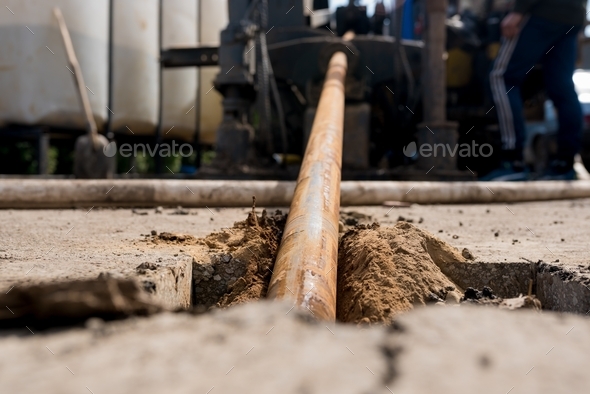
Directional drilling is a refined method that allows contractors to create a borehole path at various angles instead of merely vertical or horizontal. This technique begins with precise preparation, which involves site surveys and the determination of appropriate drilling paths. Employing of advanced digital software and modeling tools aids in formulating the most effective trajectory while considering factors such as geological conditions and existing underground utilities. This preliminary stage sets the groundwork for a successful drilling operation.
Once arrangement is finalized, the real drilling process commences. It typically involves the use of specific equipment such as drill rigs, downhole motors, and drilling fluids. The drilling fluids play a vital role in cooling the drill bit, eliminating cuttings, and stabilizing the borehole. As the drill progresses, steering tools are utilized to slowly change the angle of the bore path, allowing operators to navigate around obstructions or to reach targeted depths more effectively. Continuous surveillance of the bore path is crucial to ensure accuracy and adherence to the designed trajectory.
Technological advancements have greatly enhanced the abilities of directional drilling. Equipment has become more sophisticated, allowing for real-time data collection and analysis during executions. Approaches like mud logging and telemetry systems provide prompt feedback on borehole conditions and drilling performance. This integration of technology boosts decision-making methods and minimizes the risk of common challenges encountered during directional drilling. As a result, tasks not only become more streamlined but also reduce environmental impact and surface disruption compared to legacy methods.
Uses and Case Studies of Directional Boring
Directional boring has become an vital technique in multiple uses, particularly in urban environments where surface disruption must be limited. It is commonly used for the placement of utility lines, such as water supply, wastewater, natural gas, and telecommunications cables. These tasks often require exact navigation under streets, bodies of water, and existing infrastructure, making this technique a favored choice due to its ability to avoid surface disturbance while ensuring efficient deployment.
Numerous reports demonstrate the benefits of this method. For instance, a large urban area efficiently implemented this technique to install high-capacity telecommunications cables under congested roads without interrupting traffic flow. The initiative proved not only the effectiveness of directional drilling in terms of time and cost savings but also the slight effect it had on the local ecosystem and community. Such successful implementations highlight the technology's adaptability and trustworthiness in addressing modern infrastructure demands.
Another important implementation of this technique is in the clean energy field, particularly for wind and photovoltaic installations. By using this method to lay underground wires associating renewable energy sources to the grid, companies can improve energy transmission while maintaining land condition and reducing environmental effects. This strategy not only supports sustainable practices but also guarantees that energy infrastructure can develop in response to rising needs without jeopardizing environmental quality.