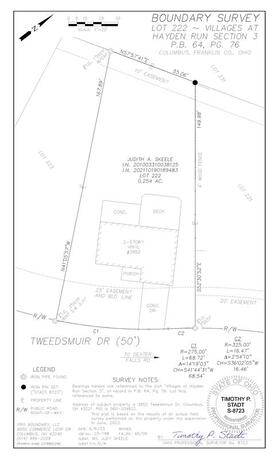
In today’s fast-paced world, the intersection of accuracy and innovation is reshaping many sectors, and surveying services are not excluded. With property management and real estate development become increasingly complex, the role of professional surveyors is crucial than ever. Thanks to advancements in tools such as GPS and drone technology, surveyors can deliver incredibly accurate and timely data that informs crucial decisions in construction, real estate, and zoning planning.
Hiring a professional surveyor is more than about obtaining measurements; it is about securing your assets and protecting your property rights. Many property developers, homeowners, and businesses rely on the expertise of surveyors to manage the complex landscape of legal regulations and zoning compliance. Understanding the significance of different types of surveys, such as property line, topography, and ALTA surveys, can help individuals make educated choices when it comes to purchasing land or embarking on construction projects. In this article, we will explore the essential aspects of surveying services, focusing on the transformative impact of technology on the industry and providing valuable insights into why hiring a professional surveyor is crucial for effective property management and development.
Crucial Reasons to Engage a Professional Surveyor
Engaging a qualified surveyor is crucial for guaranteeing the correctness and trustworthiness of land assessments. Surveyors have targeted training and expertise that enable them to interpret land boundaries, topography, and legal regulations with precision. Their knowledge decreases the risk of disputes over property lines, making them an important resource for both homeowners and developers.
A different important reason to utilize a professional surveyor is to steer clear of costly mistakes that can arise from errors or confusions of land requirements. A surveyor's comprehensive assessment can safeguard property owners substantial money in the long run by avoiding legal disputes, ensuring compliance with zoning laws, and spotting issues that may affect property value. This preventive approach makes certain that all parties involved can proceed with confidence.
Furthermore, the technology used by professional surveyors has developed considerably, including tools such as GPS and drones for enhanced accuracy and efficiency. These developments provide thorough and reliable data crucial for various applications, including construction projects and land subdivisions. By leveraging the latest technology, professional surveyors deliver results that are not only accurate but also prompt, enabling projects to progress without issues and free of delays.
Grasping Land Surveys and The Importance
Land surveys represent essential assessments that define property boundaries, measure elevation changes, along with deliver detailed information about the land's geographical characteristics. These surveys are performed by professional surveyors who use advanced technology and strategies to ensure accuracy and precision. Understanding the results and implications of a land survey is important for property owners, developers, and investors alike, as it lays the groundwork for various real estate and construction projects.
One major aspect of land surveys resides in their role in mitigating property disputes. When property boundaries are marked clearly, misunderstandings among neighbors can be lessened. Surveying services assist establish legal property lines, that are essential during disputes or when transferring or acquiring property. This clarity can save time, money, and stress, ensuring that property rights are maintained and defended.
Furthermore, land surveys prove to be indispensable in the context of development and construction. Before any project can commence, an accurate survey is necessary to comply with zoning laws, construction regulations, and safety standards. Surveyors produce thorough topographical maps and boundary definitions that assist architects and engineers in planning their designs. By investing in comprehensive surveying services, homeowners and developers can avoid expensive mistakes and make certain their projects are completed successfully and within legal parameters.
The Influence of Tech on Current Surveying
The adoption of technological tools into surveying services has revolutionized the field, improving accuracy and productivity like never before. Sophisticated tools such as Global Positioning Systems, Geographic Information Systems, and unmanned aerial vehicles have made it possible to obtain and process data with exceptional precision. GPS technology allows surveyors to ascertain specific locations in real-time, removing the uncertainties of old practices. Unmanned aerial vehicles, on the flip side, facilitate aerial surveys that capture vast areas rapidly, providing thorough topographic information that supports various surveying objectives.
A further considerable advancement is the use of digital applications for data processing and visualization. Visit this link surveying relies on advanced software that enables surveyors to generate detailed maps and three-dimensional models, making it simpler for clients to grasp the content being presented. These tools also streamline the process of developing ALTA/NSPS surveys, enhancing the standard and clarity of land surveys necessary for property sales and property development projects. By utilizing technological advancements, surveyors can provide results more quickly and with greater detail, boosting client satisfaction.
Furthermore, the digital transformation in surveying services has fostered better teamwork between surveyors, engineers, and architects. With cloud technology, teams can share data and interact in real-time, guaranteeing all parties is on the same page throughout a construction project. This synergy not only boosts the overall workflow but also lessens the likelihood of mistakes and misunderstandings, which are crucial in complex projects. As tech continues to progress, it pledges to open up even more opportunities for creativity within the surveying industry, establishing new benchmarks for precision and service provision.